LED lighting for padel courts
At 20 × 10 metres, a padel court is compact and surrounded by glass walls. Good padel lighting is therefore above all uniform and low-glare: on lobs the players look upwards, and badly aimed floodlights reflect in the glass. How much light is needed depends on the playing level.
As of:
Send an enquiry for padel lighting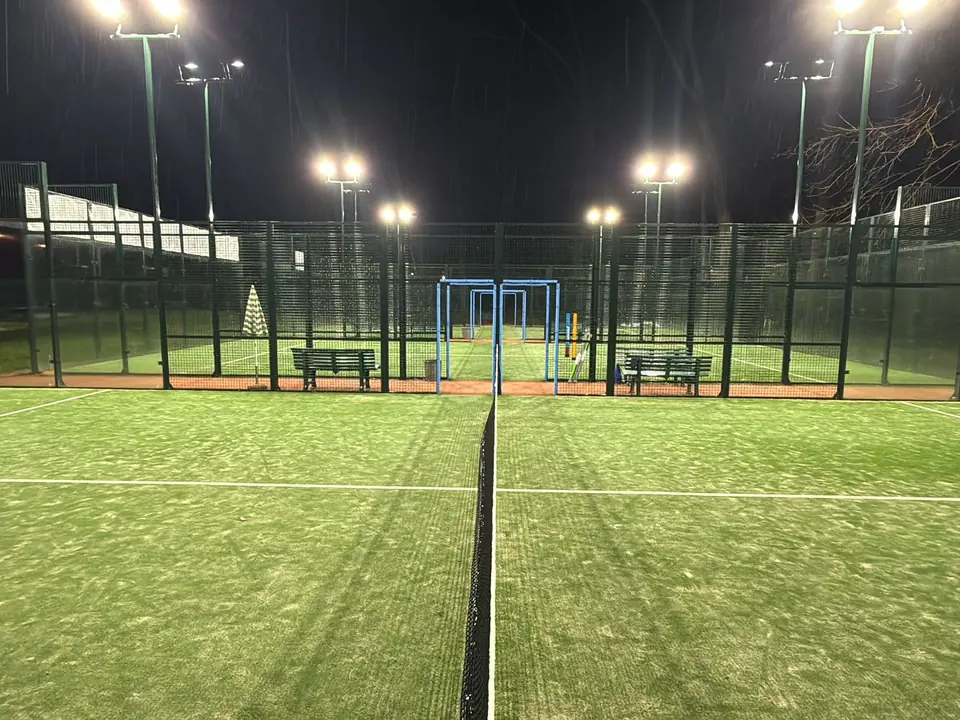
What matters in padel lighting
Glare at glass and on lobs
The floodlights are positioned and tilted so that they neither fall directly into the line of sight nor reflect in the glass walls.
Uniform into the corners
In padel the ball is played off the walls, so the light has to reach the corners and the walls too, not only the centre of the court.
Consideration for neighbours
Padel facilities are often close to residential buildings, so we plan so that as little light as possible spills beyond the facility.
Several courts, separately switchable
In facilities with several courts, the light can be switched and dimmed per court.
blendarm
geplant
Glare under control
On lobs, padel players often look upwards, and the glass reflects. We therefore match mast height, tilt and optics precisely to this in the lighting calculation.
- Mast height
- Tilt
- Optics
- Reflection on the glass
Light by playing level
| Average illuminance | Playing level | Lighting class | Uniformity | Glare rating |
|---|---|---|---|---|
| 200lx | Leisure and training | U 0.5 | ||
| 300lx | Competition, court inspection | U 0.5 | ||
| 500lx | National competitions | U 0.7 |
Lighting requirements by playing level: from leisure to TV
What do the values mean?
Lux tells you how much light reaches the pitch. Uniformity shows how evenly it is distributed, and the glare rating how strongly the floodlights cause glare.
MoreLess
Illuminance (lx): How much light falls on a surface. 1 lx equals 1 lumen per square metre. For sports facilities, the average horizontal illuminance on the playing area is usually given.
Uniformity (U): Lowest divided by average illuminance. The closer the value is to 1, the more even the light.
Glare rating (GR): Assesses how strongly floodlights cause glare at outdoor facilities, on a scale from 10 (no glare) to 90 (unbearable glare).
Suitable floodlights
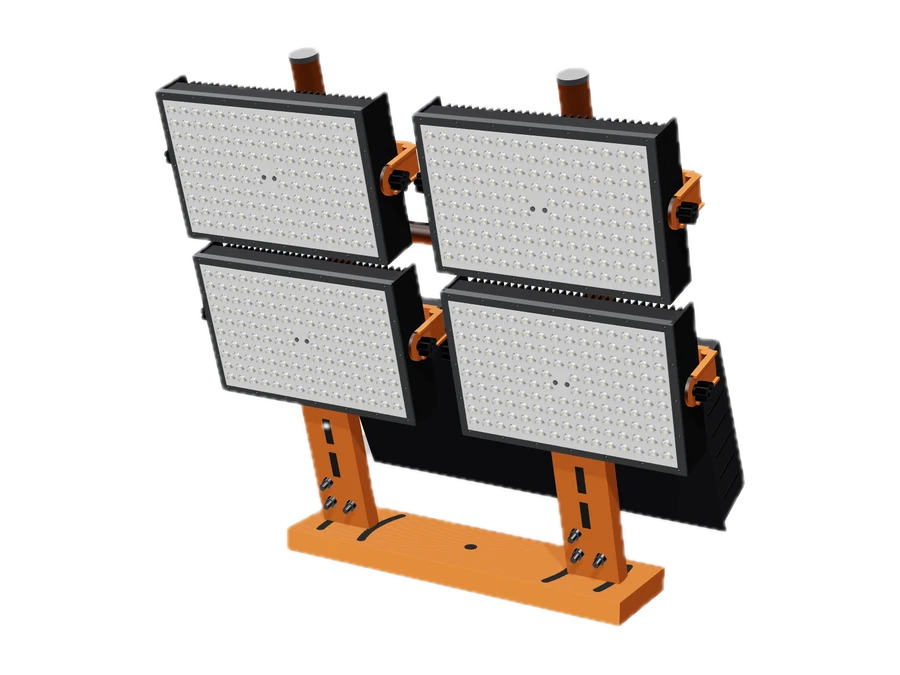
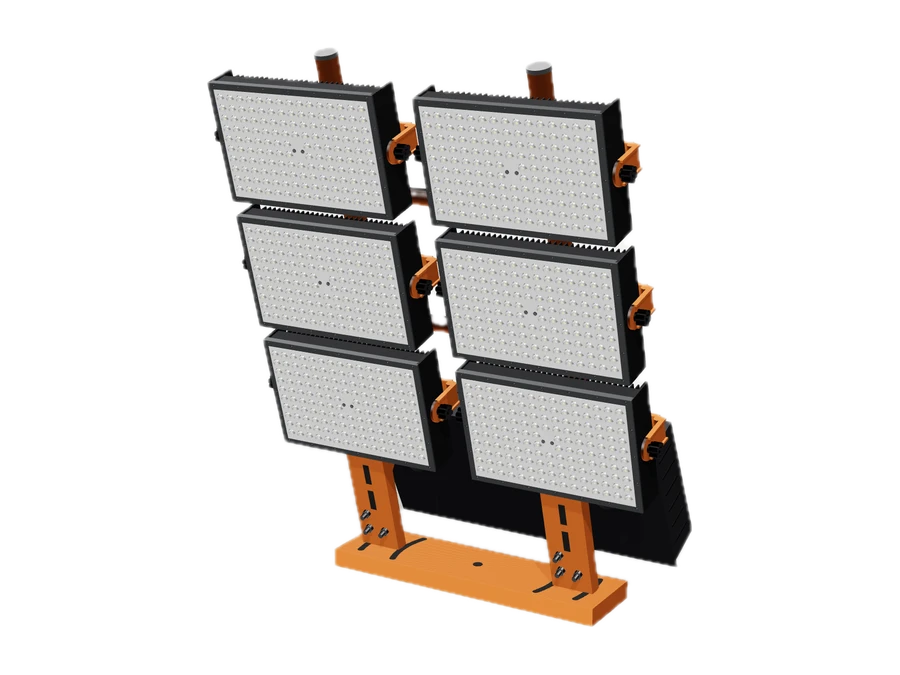
For single courts and small facilities the STL963 is usually the right choice, for larger facilities with few masts the STL1443.
- Series 12
STL963
Smaller installations and few masts: tennis, padel, training pitches.
- Colour temperature
- 3000 K, 4000 K, 5000 K
- Power
- 960 W
- Weight
- 20 kg
Datasheet as PDF (459 KB) - Series 12
STL1443
Larger pitches with few masts: football, hockey, athletics.
- Colour temperature
- 3000 K, 4000 K, 5000 K
- Power
- 1,440 W
- Weight
- 27.5 kg
Datasheet as PDF (436 KB) Series 16
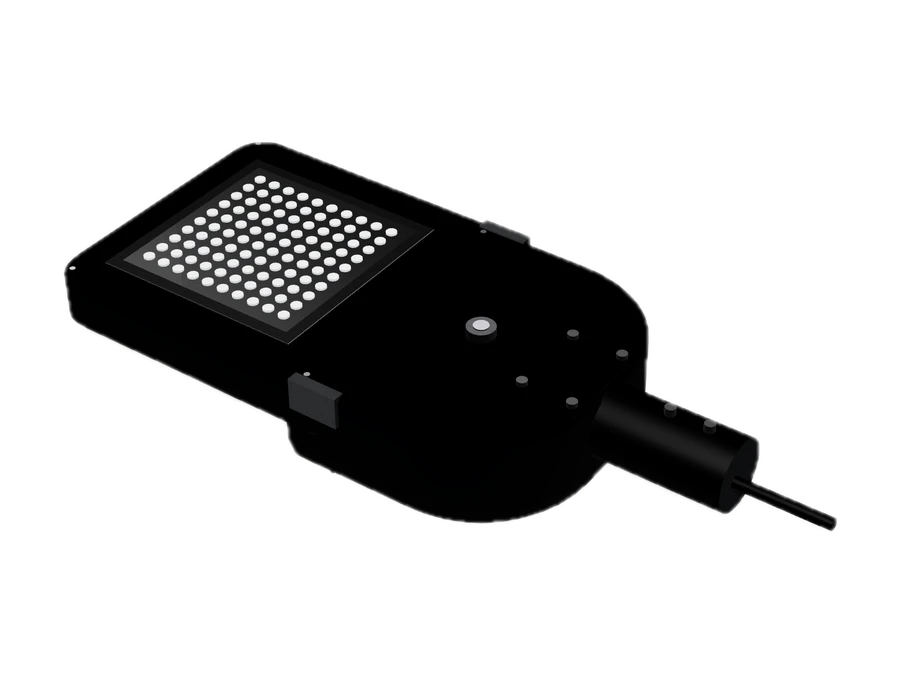
Padel and smaller areas on low masts, as well as paths, access roads and car parks.
- Colour temperature
- 3000 K, 4000 K, 5000 K
- Power
- 60–141 W
- Weight
- 7–9.25 kg
Datasheet as PDF (183 KB)
Frequently asked questions
How many floodlights does a padel court need?
That depends on mast height, mast positions, playing level and surroundings. We calculate it for your court with the luminous intensity distribution data (LDT) of the floodlights, rather than with rules of thumb.
Can existing masts continue to be used?
Often yes, if structural stability and load capacity are adequate. You provide the details on your masts and are responsible for them. We only check structural stability during an on-site visit. According to the datasheet, an STL963 weighs 20 kg.
Which colour temperature is the right one?
The Series 12 floodlights (STL963, STL1443) are available in 3000, 4000 or 5000 K. Near residential buildings or natural areas, warm white light can be sensible or required. We clarify this in the individual case.
Is there funding for padel lighting?
Whether funding is available depends on your country, your region and who applies. We check this with you.
Send an enquiry for padel lighting
Location and contact are enough. We will get back to you with an initial assessment for your pitch.
Talk directly