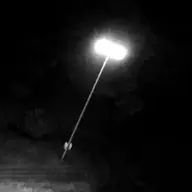
Mast height and mast layout: how tall, how many, where?
For football, the guide from the football associations of Saxony, Saxony-Anhalt and Thuringia recommends a mounting height of 16 m for training and 18 to 20 m for competition facilities, and 6 to 8 masts per full-size pitch for new systems. For padel, the FIP requires at least 6 m to the underside of the floodlights. The exact height and layout come from the lighting calculation for your site.
From Leon Weber, Key Account Manager Sport · As of:
Why mounting height matters
Mounting height is the height of the floodlights above the ground. According to licht.wissen 08, floodlights should be mounted as high as possible so that players are not dazzled when looking at high-flying balls. Calculating the mounting height precisely, together with well-shielded floodlights, also protects the neighbourhood from light pollution.
According to the association guide, too low is often the case in existing systems: masts of 8 to 12 m cause glare, poor illumination and large shadow areas. It cites good results with masts of 16 m and above that stand directly beside the pitch.
Height and masts by sport
Associations and technical literature give these values. Where no figure is given, the height follows from the lighting calculation.
- Football, training: 16 m mounting height recommended
- Football, competition facility: 18 to 20 m recommended
- Football, new full-size pitch: 6 to 8 masts recommended; according to the association guide, 14 to 16 m is generally used
- Athletics around the pitch: generally 6 masts, but more floodlights of higher output
- Padel: at least 6 m to the underside of the floodlights, masts outside the court; for new facilities the FIP suggests 8 m if the floodlights are inside the court walls
- Tennis: wide-beam floodlights, mounted high enough that players are not dazzled
- Outdoor arena: one or more masts depending on size; the higher the luminaires, the lower the risk of glare
For padel, the height also includes the clear height above the court: the FIP requires at least 6 m without obstacles such as floodlights, and suggests 8 m for new facilities. If a mast stands in the safety area outside the court, play outside the court is not permitted.
Four, six or eight masts?
According to licht.wissen 08, systems with four or six masts along the pitches are common. The association guide recommends 6 to 8 masts for new full-size pitches and names disadvantages in illumination for 4-mast systems. Both are built: Dettingen unter Teck proposed 4 masts for its grass pitch, and the light forecast for the stadium in Haseldorf assumes 4 masts and a mounting height of 16 m.
More masts do not automatically mean better light. According to the association guide, existing systems have anywhere from two to twenty masts, and their number alone says nothing about light quality. Many masts also increase maintenance effort, because aerial work platforms have to drive onto the pitch and put strain on the turf.
Where masts may stand
Under DIN 18035-1, lighting masts must stand outside the obstacle-free zone, like other fixed installations. The diagram in the association guide gives at least 1 m at the touchline and 2 m at the goal line.
Also check the surroundings. According to the association guide, trees too close to the pitch reduce the light distribution, and treetops grow into the light path over the years. In tennis, according to licht.wissen 08, the illuminance may only fall off slightly for a few metres beyond the sidelines, because play also takes place there.
New mast or existing?
Three questions decide: Is the height enough for the lighting calculation? Are the masts in the right place? Is the mast structurally sound? How to check this is described in the guide on retrofitting existing masts.
The building site matters too. The city of Landsberg am Lech kept using its masts, among other reasons because replacing them would have damaged the newly renovated sports surfaces. Anyone planning new masts should also clarify the permit early: the Musterbauordnung (Model Building Code) exempts floodlight masts from the permit procedure only up to 10 m in height, and the federal states regulate this differently.
We supply dimensions, weights and the lighting calculation for your masts. The structural stability verification is prepared by a structural engineer or a testing company.
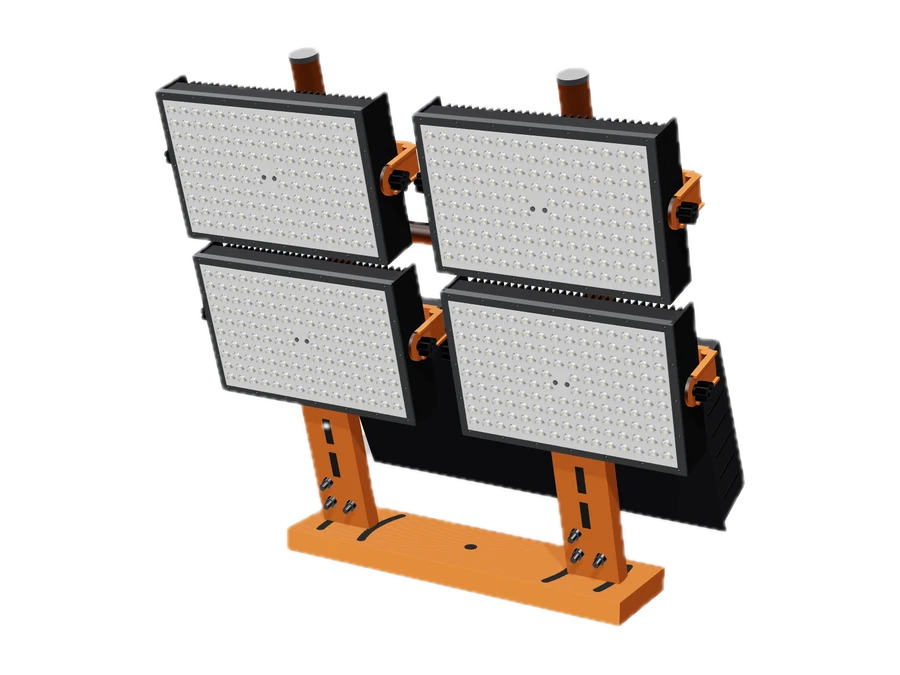
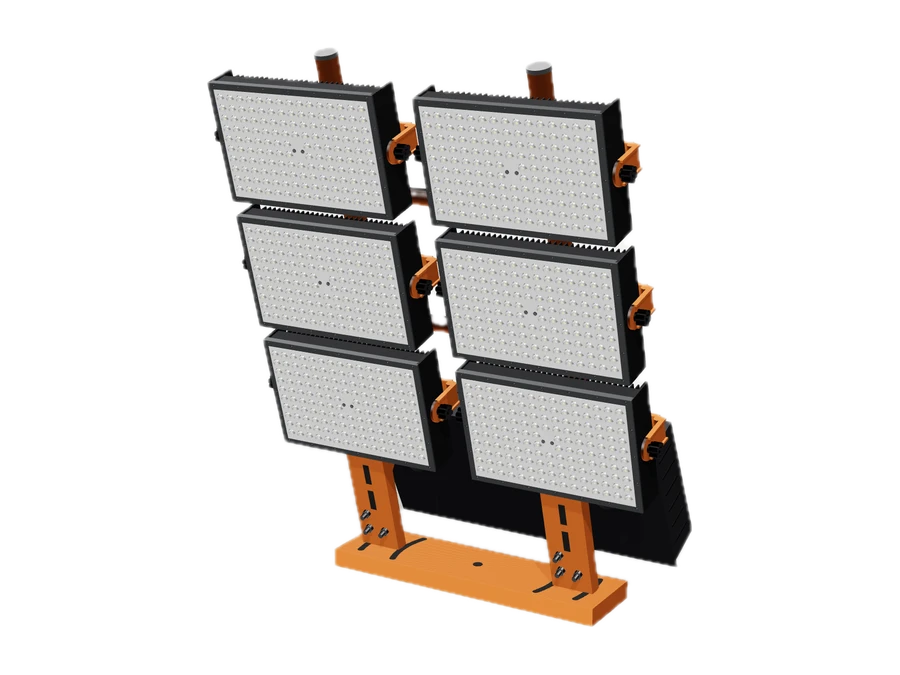
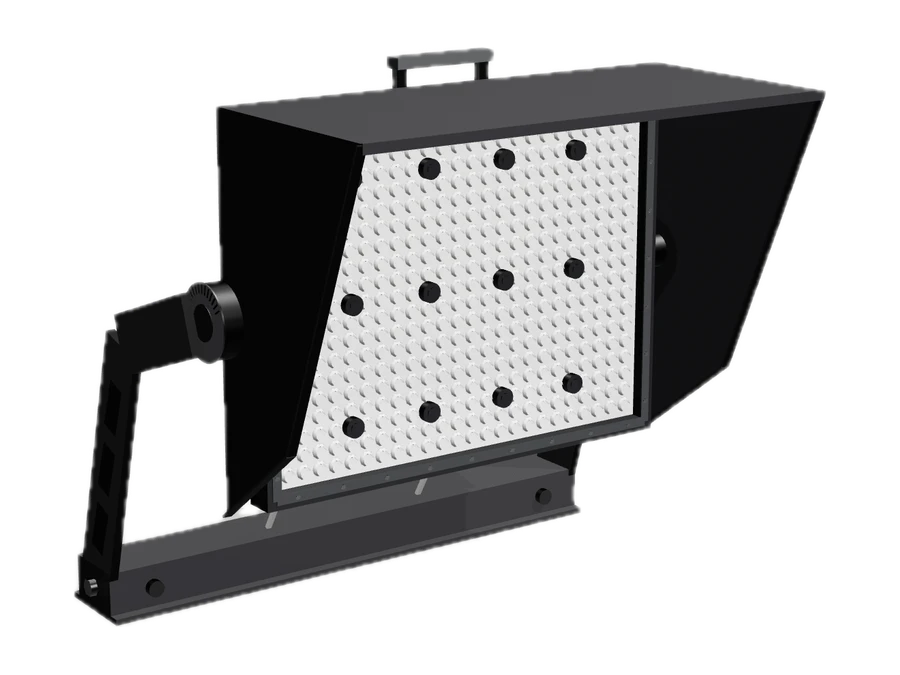
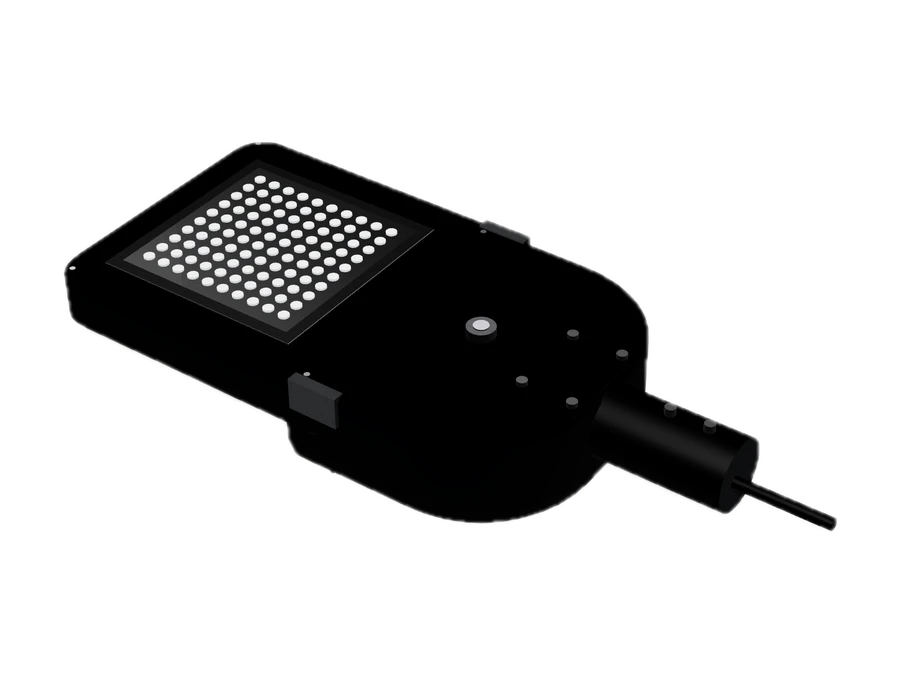
Floodlights and mast luminaires
- Series 12
STL963
Smaller installations and few masts: tennis, padel, training pitches.
- Colour temperature
- 3000 K, 4000 K, 5000 K
- Power
- 960 W
- Weight
- 20 kg
Datasheet as PDF (459 KB) - Series 12
STL1443
Larger pitches with few masts: football, hockey, athletics.
- Colour temperature
- 3000 K, 4000 K, 5000 K
- Power
- 1,440 W
- Weight
- 27.5 kg
Datasheet as PDF (436 KB) - Series 12
STL1500
High requirements from about 500 lx: competition, higher leagues, stadium.
- Colour temperature
- 3000 K, 4000 K, 5000 K
- Power
- 1,500 W
- Weight
- 28 kg
Datasheet as PDF (333 KB) Series 16
Padel and smaller areas on low masts, as well as paths, access roads and car parks.
- Colour temperature
- 3000 K, 4000 K, 5000 K
- Power
- 60–141 W
- Weight
- 7–9.25 kg
Datasheet as PDF (183 KB)
Frequently asked questions
How tall do floodlight masts on a football pitch have to be?
The guide from the football associations of Saxony, Saxony-Anhalt and Thuringia recommends 16 m for training and 18 to 20 m for competition facilities. According to the association guide, the height is to be determined as part of planning.
How many masts does a full-size pitch need?
For new systems, the association guide recommends 6 to 8 masts. There are also 4-mast systems, for which the association guide names disadvantages in illumination.
How high do the floodlights have to hang for padel?
The FIP rules require at least 6 m from the ground to the underside of the floodlights. For new facilities, the FIP suggests 8 m if the floodlights are mounted inside the court walls. The masts belong outside the court.
Are existing masts of 10 or 12 m enough?
Only the lighting calculation for the specific pitch can show that. The association guide considers masts of 8 to 12 m often too low. In addition, structural stability must be demonstrated.

Have masts calculated for your site
Tell us the sport, level of play and existing masts with height and location. We supply the lighting calculation.
Start enquiryTalk directly


Sources
- Football associations of Saxony, Saxony-Anhalt, Thuringia: Lighting of football pitches and training areas (2019), pp. 4–7, 10, 12
- licht.de: licht.wissen 08, Sport und Freizeit (sections on sports grounds, athletics, tennis, hockey, equestrian sport, light pollution)
- International Padel Federation: FIP Rules of Padel, court height and lighting section
- Gemeinde Dettingen unter Teck: Sitzungsvorlage 142/2015, Flutlichtanlage für das Rasenspielfeld (meeting paper, floodlight system for the turf pitch)
- Gemeinde Haseldorf, B-Plan Nr. 9: forecast of light pollution (14.05.2025)
- City of Landsberg am Lech: project information on floodlight system refurbishment
- Musterbauordnung (Model Building Code), § 61(1) No. 5 letter e (version adopted 25.09.2020)