LED lighting for ice rinks and ice stadiums
For ice hockey and figure skating indoors, the European standard DIN EN 12193 gives 300 lx for training and club use, 500 lx for competitions at medium level and 750 lx for high-performance sport, each with a uniformity of 0.7. The most demanding sport in the hall determines the design, so public skating is covered. There are also three particular features of the ice surface: reflections, heat input and indoor climate.
As of:
Ice rink lighting enquiryWhat matters in the ice rink
Levels for every kind of use
Public skating, training and matches do not need the same light, so brightness levels belong in the planning from the start.
Light for the puck
The black puck is small and very fast, so the goal zones should be somewhat brighter than the playing area and the surroundings, including the stands, should be brightened.
Few reflections on the ice
The glossy ice surface mirrors the light, so the choice and arrangement of the luminaires matter particularly.
Heat on the ice surface
Lighting also brings heat onto the ice, and its share varies by hall and facility.
Think about the indoor climate
Humidity and condensation are an issue for building and ventilation in ice rinks, so clarify luminaire position and operating conditions early with the building services.
Effects for goals and entrances
At Peißenberg Miners e.V. we lit the entire ice stadium, including a lighting control system with effects for goals and team entrances.
Ball-impact resistant
Our Series 07 high-bay luminaires are ball-impact resistant. licht.de also names such luminaires for ice rinks.
blendarm
geplant
Reflections and glare on the ice
When choosing and arranging luminaires, care must be taken to create as few reflections as possible on the glossy ice. For speed skating, according to licht.wissen 08 the standard sets no glare limit; it can be limited by a careful arrangement of the luminaires. We coordinate this in the lighting calculation for your hall.
- Distribution
- Optics
- Hall height
Light by playing level
| Average illuminance | Playing level | Lighting class | Uniformity | Glare rating |
|---|---|---|---|---|
| 300lx | Training, school and recreational sport, simple competitions | Class III | U 0.7 | |
| 500lx | Competitions at medium level, performance training | Class II | U 0.7 | |
| 750lx | High-performance sport | Class I | U 0.7 |
What do the values mean?
Lux tells you how much light reaches the pitch. Uniformity shows how evenly it is distributed, and the glare rating how strongly the floodlights cause glare.
MoreLess
Illuminance (lx): How much light falls on a surface. 1 lx equals 1 lumen per square metre. For sports facilities, the average horizontal illuminance on the playing area is usually given.
Uniformity (U): Lowest divided by average illuminance. The closer the value is to 1, the more even the light.
Glare rating (GR): Assesses how strongly floodlights cause glare at outdoor facilities, on a scale from 10 (no glare) to 90 (unbearable glare).
Suitable floodlights
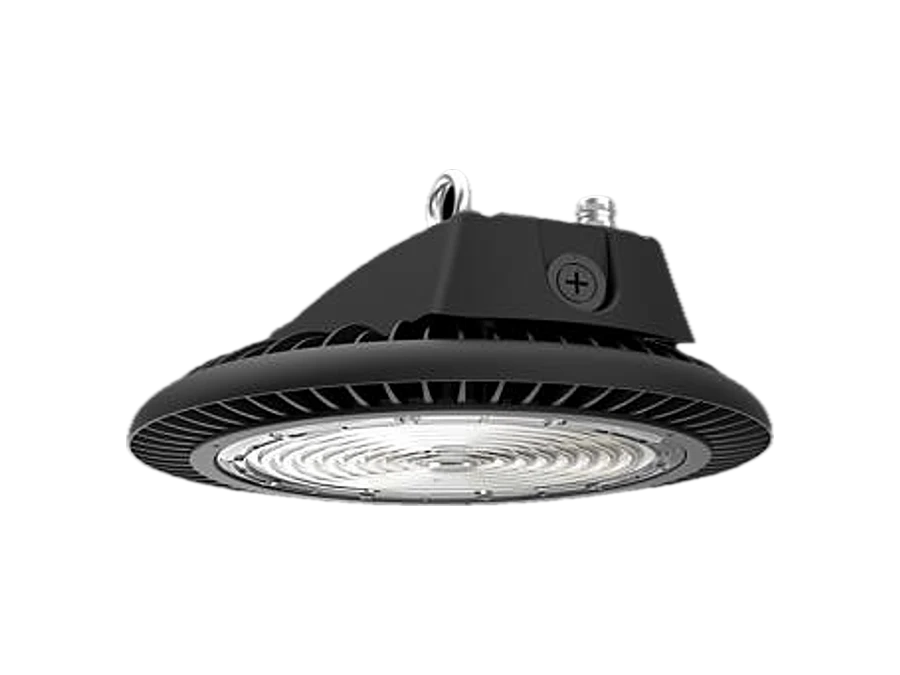
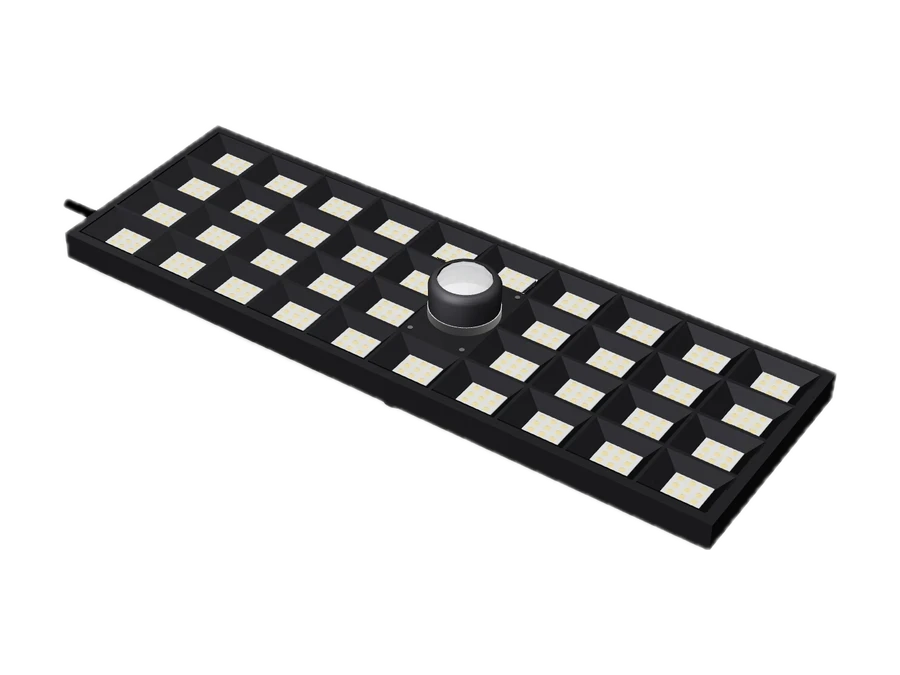
For ice rinks we use the Series 07 high-bay luminaires; according to the datasheet they are rated IP65 and for use from −20 °C (07v5 ECO) or −40 °C (07v6).
- Series 07
07v5 ECO
Halls with robust requirements: riding halls, multi-purpose, tennis and padel halls, storage and multi-purpose halls.
- Colour temperature
- 3000 K, 4000 K, 5000 K
- Power
- 150–300 W
- Weight
- 8.7–9.5 kg
Datasheet as PDF (286 KB) - Series 07
07v6
Riding halls, sports halls, exhibition areas, industrial and commercial halls. Extremely low-glare.
- Colour temperature
- 3000 K, 4000 K, 5000 K
- Power
- 100–200 W
- Weight
- 4.25 kg
Datasheet as PDF (298 KB)
Emergency lighting needed too?
If needed, you can get emergency lighting for your site through our sister brand NOTLUX.
To NOTLUXFrequently asked questions
How many lux does an ice rink need?
For ice hockey and figure skating, DIN EN 12193 gives 300 lx in Class III, 500 lx in Class II and 750 lx in Class I, each with a uniformity of 0.7. Training, youth and club use generally fall under Class III or II. The goal zones should be somewhat brighter than the rest of the playing area.
What values apply to speed skating and public skating?
For speed skating indoors, licht.wissen 08 gives 500 lx with a uniformity of 0.7, 300 lx with 0.6 and 200 lx with 0.5. At the finish, 1,000 lx vertical is called for the photo-finish system and judges. A facility for ice hockey and speed skating also suits recreational skating, and a separate level then saves electricity and heat.
Do federations and leagues require more light?
That is possible, so ask your federation or league about your competition class. The rules of play of the Deutscher Eishockey-Bund allow the Oberliga only on covered ice rinks according to DIN 18036 and give no lux value. At lower-division tournaments, the IIHF requires 900 lx on the ice surface and 600 lx on the training area.
How much light does an open-air ice stadium need?
For outdoor ice hockey, licht.wissen 08 gives 200 lx with a uniformity of 0.5, and 500 lx and 750 lx each with 0.7. Depending on the size of the ice surface, systems with four, six or more masts are suitable.
Is an LED retrofit worthwhile?
That depends on the existing system and its use. The city of Ratingen gives 52.5 kW for the old system and 17.7 kW for the new, brighter one in its ice sports hall, and uses the ice-free time in summer for the conversion. The town of Höchstadt a. d. Aisch refurbished 228 light points in its ice sports hall with funding from the National Climate Initiative (Nationale Klimaschutzinitiative).
Which standards apply to ice sports halls?
The values for the sports are given in DIN EN 12193. In Germany, DIN 18036 also governs the planning and construction of ice sports facilities, with its own chapter on lighting; a draft from 2026 is available. Where emergency lighting is required, licht.wissen 08 gives for speed skating 5 percent of the illuminance for at least 30 seconds.
Ice rink lighting enquiry
Tell us the hall or stadium, use and competition class. We will get back to you with an initial assessment for your facility.
Talk directly