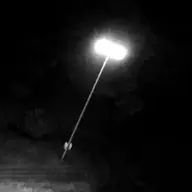
Floodlighting too dark or uneven: causes and remedies
Floodlighting that is too dark or patchy usually has several causes: aged or defective lamps, dirty luminaires, unfavourable alignment, masts that are too low or trees in the light path. A measurement on a grid in accordance with DIN EN 12193 brings clarity. If the average or uniformity is below the values of your lighting class, maintenance or repair is due. If spare parts are missing or the masts are not sufficient, that points to a retrofit.
From Leon Weber, Key Account Manager Sport · As of:
What it can be due to
The floodlighting guide from the football associations of Saxony, Saxony-Anhalt and Thuringia describes typical defects in existing systems. Together with licht.wissen 08, this gives the following list:
- Lamps: luminous flux decreases with operating time, individual lamps fail or are unsuitable
- Dirt: dirt and ageing of the luminaire reduce the light that reaches the pitch
- Alignment: if possible, every position on the pitch should receive light from at least two luminaires, otherwise hard shadows are likely
- Masts: according to the association guide, in existing systems they are often only 8 to 12 m high, which favours glare, poor lighting and large shadow areas
- Layout: often only one half of the pitch is lit, and many masts alone do not yet mean good lighting quality
- Trees: tree crowns that have grown too close to the pitch disturb the light distribution
- New need: if running tracks surround the pitch or the team plays at a higher level, the old design may no longer be sufficient
What the maintenance factor has to do with it
The standard values for average illuminance are maintained values. They must never be undercut, and once they are reached, maintenance is required. So that this does not happen shortly after commissioning, the planning sets the new-installation value higher by a maintenance factor.
The factor takes into account luminous flux depreciation, lamp failures, and dirt and ageing of the luminaire. If it cannot be determined, licht.wissen 08 gives the reference value 0.7 for outdoor facilities. With a maintained value of 75 lx, this would give a calculated new-installation value of about 107 lx.
For your system this means: ask which factor and which maintenance method were agreed in the planning. If there are no documents on this, only a measurement shows how much light still arrives today.
How it is re-measured
According to the association guide, the area is divided into a uniform grid in accordance with DIN EN 12193. In each grid cell the illuminance is measured with the floodlights switched on, horizontally at ground level. The result should be documented in writing. The measuring points give:
- Average illuminance Em: is the system bright enough overall?
- Lowest value Emin: where is the darkest spot?
- Uniformity Emin / Em: is the light evenly distributed?
For football, the reference values are Class III with 75 lx and 0.5, Class II with 200 lx and 0.6, and Class I with 500 lx and 0.7. A good average with poor uniformity points more to alignment, masts or obstacles than to a system that has aged overall.
The association guide names a drop below 80% of the nominal illuminance as the limit from which repair or maintenance is needed. After that it requires a new measurement report and, before recommissioning, an inspection by a qualified electrician in accordance with DGUV Regulations 3 and 4.
What can often be checked without a conversion
First the measurement, then the intervention. After that, the obvious points can be worked through:
- Replace defective lamps and ballasts as long as they are still available
- Clean the floodlights
- Check alignment against the lighting calculation, if still available
- Deal with tree crowns in the light path
Work on masts and electrics belongs in the hands of specialist companies. The association guide names defects such as unacceptable cables and insulation faults, which are frequently found in existing systems.
When a retrofit makes more sense than repair
There is no fixed limit, but some signs point to switching:
- Spare parts are hardly available any more: the city of Landsberg am Lech found this with its system from 1976 and retrofitted
- The system is due anyway: according to a 2017 reply, the city of Mainz automatically converts to LED when a system has to be replaced because of age or defect
- The measured values stay below the class value even after maintenance
- The class rises, for example from training to competition
- Electricity and maintenance costs are to fall
At the Sportplatz am Nocken, the city of Wuppertal went from six masts with metal halide lamps and 120 lx to four masts with LED and around 200 lx. There, however, the pitch was also rebuilt. Whether this is possible at your facility is only shown by the lighting calculation with the existing mast positions.
Before you retrofit, clarify the structural engineering and funding. According to the association guide, LED floodlights can be heavier than the old luminaires. A pure lamp replacement is not funded under the Kommunalrichtlinie, and no order may be placed before the funding decision.
LED floodlights for retrofit
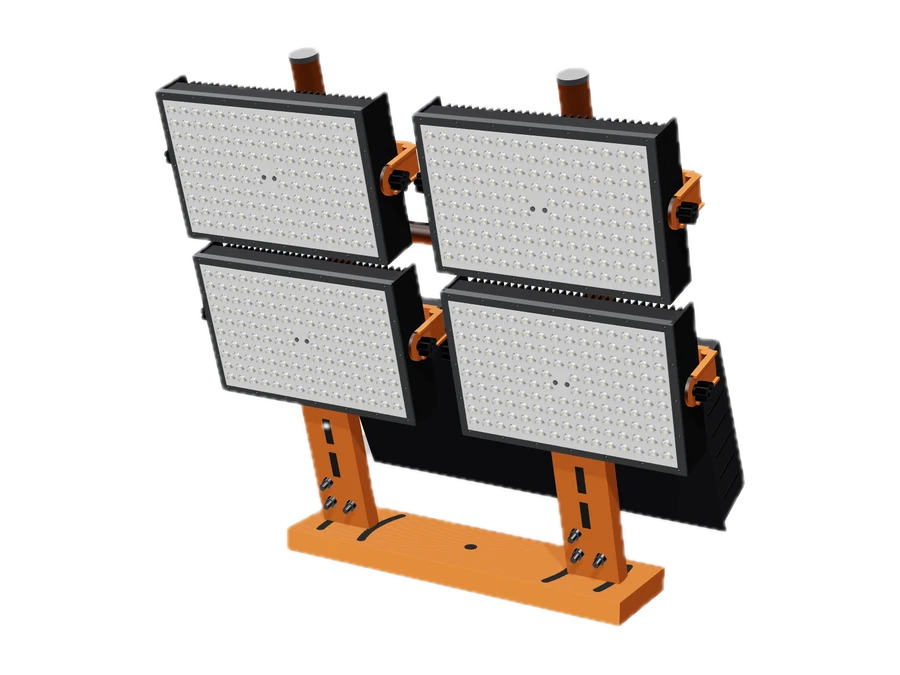
- Series 12
STL963
Smaller installations and few masts: tennis, padel, training pitches.
- Colour temperature
- 3000 K, 4000 K, 5000 K
- Power
- 960 W
- Weight
- 20 kg
Datasheet as PDF (459 KB) - Series 12
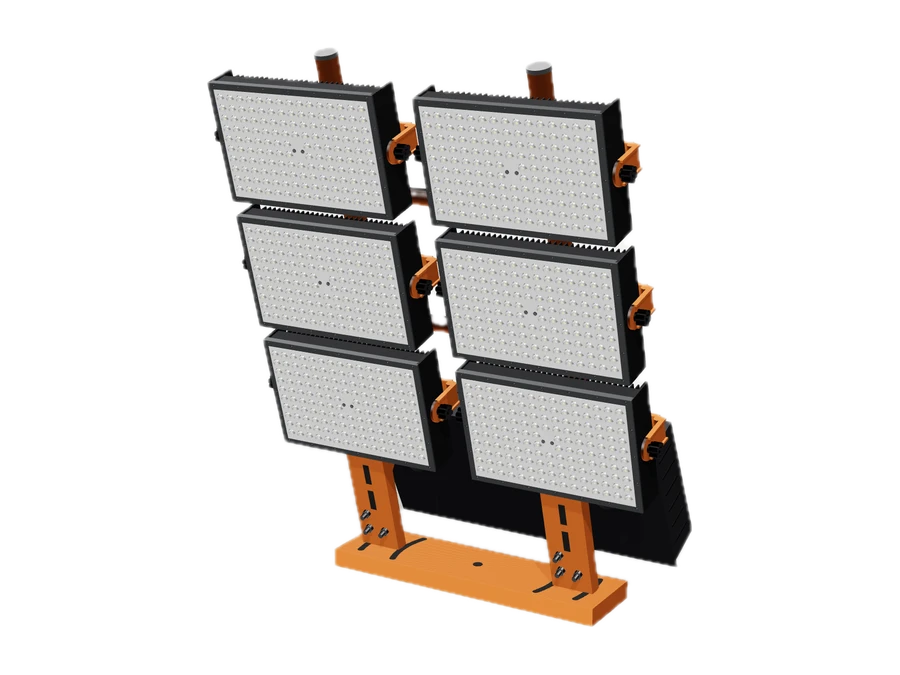
STL1443
Larger pitches with few masts: football, hockey, athletics.
- Colour temperature
- 3000 K, 4000 K, 5000 K
- Power
- 1,440 W
- Weight
- 27.5 kg
Datasheet as PDF (436 KB) - Series 12
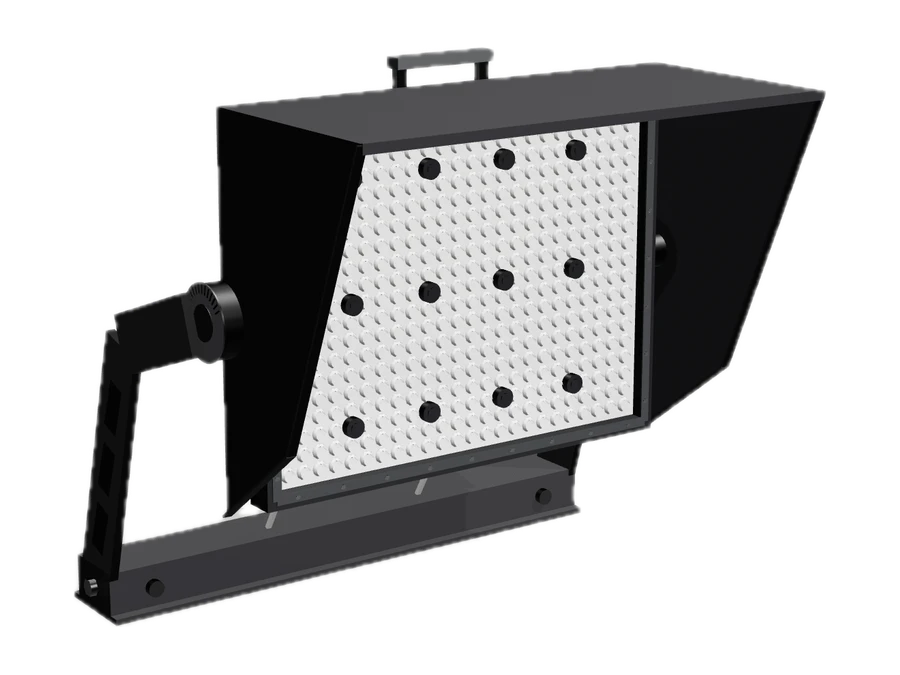
STL1500
High requirements from about 500 lx: competition, higher leagues, stadium.
- Colour temperature
- 3000 K, 4000 K, 5000 K
- Power
- 1,500 W
- Weight
- 28 kg
Datasheet as PDF (333 KB)
Frequently asked questions
How do I know whether my floodlighting is too dark?
The impression on the pitch is not enough. A measurement on a grid in accordance with DIN EN 12193 shows average illuminance and uniformity. You compare these values with your lighting class, for football for example 75 lx and 0.5 in Class III.
Why is the floodlighting in the middle of the pitch darker than at the mast?
According to the association guide, common reasons are masts that are too low, an unfavourable layout or only partly lit pitches. According to licht.de, every position should if possible always be lit by at least two luminaires. Whether this is the case at your facility is shown by measurement and lighting calculation.
What does a maintenance factor of 0.7 mean?
The new-installation value is planned so high that the maintained value is still reached after ageing and dirt. With a factor of 0.7, the maintained value is 70% of the new-installation value. licht.wissen 08 gives 0.7 as a reference for outdoor facilities if no factor can be determined.
Is it enough to replace only the lamps?
For aged or defective lamps this can help as long as suitable lamps are available. It does not help against masts that are too low or a poor layout. A pure lamp replacement is not funded under the Kommunalrichtlinie.

Have your floodlighting recalculated
Tell us the sport, masts, current equipment and, if available, your measured values. We calculate the LED solution for your facility.
Start enquiryTalk directly


Sources
- licht.de: licht.wissen 08 Sport und Freizeit (2010, referring to DIN EN 12193:2008), pp. 5–7
- Football associations of Saxony, Saxony-Anhalt, Thuringia: Beleuchtung von Fußball-Spielfeldern und Trainingsflächen (Lighting of football pitches and training areas) (2019), pp. 4–6, 10–12, 15, 23
- licht.de: Allgemeine Sportplätze (general sports grounds)
- Landessportbund NRW and EnergieAgentur.NRW: Lighting of sports facilities (12/2018), examples Troisdorf and Wuppertal, pp. 14–17
- City of Landsberg am Lech: project information on floodlight system refurbishment
- City of Mainz: reply to enquiry 1695/2017 on the conversion of sports pitch floodlighting, 27 November 2017
- Kommunalrichtlinie, no. 4.2.1 and klimaschutz.de, page on outdoor and street lighting